



Chevy Trax vs. Honda HR-V: Why the 2026 Trax Is the Better Choice for Bellefontaine Drivers
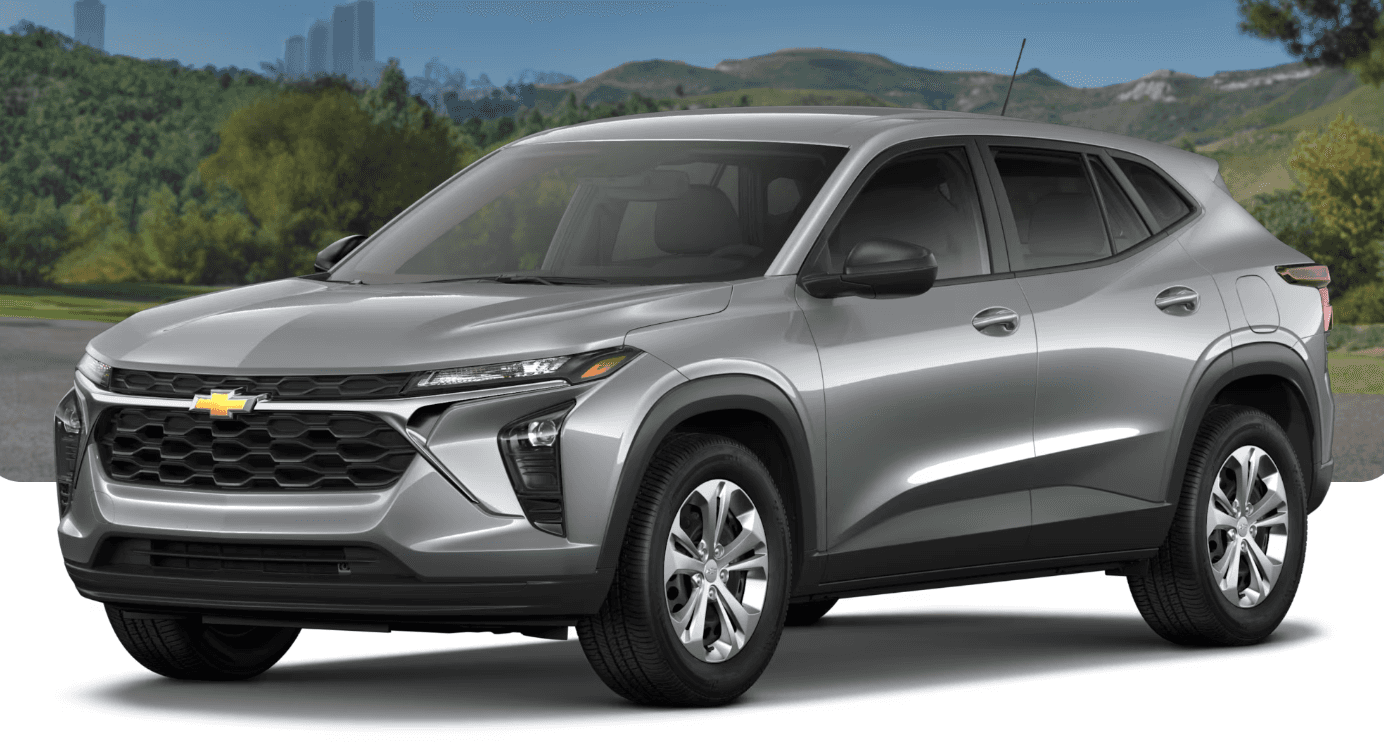
In the compact crossover SUV world, the 2026 Chevrolet Trax and the 2026 Honda HR-V both bring a lot to the table—modern styling, smart tech, and the everyday practicality Ohio drivers want.
The difference is how far your money goes. When you compare pricing, usable space, fuel economy, and daily drivability, the 2026 Trax delivers a stronger value story for Bellefontaine shoppers—especially when you start by browsing what’s actually available in our new Chevy Trax inventory.
Price & Value Comparison (2026 Models)
The 2026 Chevy Trax starts at $21,600 MSRP, while the 2026 Honda HR-V starts at $26,500 MSRP. That gap matters in real life, because it often means the Trax can land at a more comfortable monthly payment even after you factor in trim upgrades.
Trax trims also stay budget-friendly as you move up the lineup, with 2RS and ACTIV models starting around $25,300 MSRP—still below the HR-V’s starting point. If you like to run your own numbers before visiting the showroom, our monthly payment calculator makes it easy to compare scenarios in minutes.
Note: MSRPs are manufacturer estimates and don’t include tax, title, registration, dealer fees, or destination charges.
Interior Space & Comfort: Where the Trax Wins Day-to-Day
Both crossovers seat five, but the 2026 Trax has a roomier feel where passengers notice it most. Headroom is slightly better in the Trax (39.6 inches front / 38.1 inches rear), and while front legroom is essentially a tie at 41.9 inches, the Trax gives rear passengers more stretch-out space with 38.7 inches of rear legroom compared to the HR-V’s 37.7 inches.
That extra breathing room makes the Trax feel more comfortable for carpools, growing teens, and longer drives outside of town.
Cargo space is another practical advantage: with the rear seats up, the Trax offers 25.6 cubic feet behind the second row versus 24.4 cubic feet in the HR-V. The HR-V edges the Trax slightly with seats folded (55.1 vs. 54.1 cubic feet), but for everyday errands—groceries, strollers, sports gear—the Trax’s “seats-up” space is the one you’ll use most.
If your SUV needs to fit family life (not just commute life), check out our local guide on what makes a vehicle family-friendly in Logan County.
Technology: Modern Screens Without the Price Creep
The 2026 HR-V now comes with a standard 9-inch touchscreen, which is a nice update, but the Trax still feels like the smarter tech buy because it delivers a modern, big-screen cabin at a lower entry price.
The Trax offers an 8-inch center display on the base trim and upgrades to an 11-inch touchscreen on LT and above, paired with an 8-inch driver information display on those trims—giving you more screen real estate and a more “premium” layout without needing a premium MSRP.
If you want a deeper explanation of how Chevy’s systems are designed for daily ease (maps, audio, smartphone features, and menus that don’t feel buried), our breakdown of Chevrolet Infotainment features is a helpful read.
Safety & Driver Assistance: Strong Standard Coverage
Both the 2026 Trax and HR-V come loaded with driver-assist features that help reduce stress in traffic and add confidence on highways, especially during busy commutes and unpredictable weather.
The advantage for the Trax is how much of that safety tech shows up as standard equipment for the money, giving budget-focused drivers fewer “must-buy” add-on decisions.
If you want a plain-English look at what these features actually do (automatic emergency braking, lane assist systems, alerts, and more), our guide on Chevy safety features and Chevy Safety Assist breaks it down clearly.
Performance & Driving Feel on Ohio Roads
On paper, the 2026 HR-V shows more horsepower (158 hp), but real-world responsiveness often comes down to torque—and that’s where the 2026 Trax comes out ahead.
The Trax’s turbocharged 1.2L engine makes 137 hp but delivers 162 lb-ft of torque, while the HR-V’s 2.0L makes 138 lb-ft. Around Bellefontaine, that stronger low-end pull helps the Trax feel more eager in the situations drivers deal with constantly: rolling starts, quick merges, and stop-and-go traffic.
For a broader look at what matters most for local driving—winter traction, rural roads, and day-to-day comfort—our guide on what Chevy and GMC models work best for Bellefontaine roads offers helpful context.
One note worth knowing: the HR-V offers available AWD, while the Trax is front-wheel drive only. For many Ohio drivers, the bigger difference-maker is still good tires and smart driving habits, and the Trax remains the better pick if your priority is value, daily comfort, and city-friendly efficiency.
Fuel Economy: The Trax Saves More in Everyday Driving
The 2026 Trax is rated at 28 mpg city / 32 mpg highway / 30 mpg combined, while the 2026 HR-V is rated at 26/32/28 (FWD) and 25/30/27 (AWD).
If most of your driving is around town—school runs, work commutes, and errands—the Trax’s higher city rating can add up to fewer fuel stops across the year.
Why the 2026 Trax Is the Better Buy
When you compare the full picture, the 2026 Chevy Trax is the stronger value for Bellefontaine drivers. It starts thousands less, offers more usable cargo space behind the rear seats, gives rear passengers more legroom, and delivers better city fuel economy.
Even in areas where the HR-V looks good on paper, the Trax’s mix of torque-forward drivability and lower cost makes it the more practical “everyday win.”
Test Drive the 2026 Chevy Trax in Bellefontaine
Reading comparisons helps, but a test drive makes the differences obvious—especially when you feel the Trax’s responsiveness in town and see how the cabin layout fits your daily routine.
If you want to prepare before you visit, our local guide on how Chevy financing works in Bellefontaine walks through what to expect, and our finance terms guide can help you feel more confident when comparing loan options.
If your credit isn’t perfect, you’re not alone—our step-by-step resource on getting approved for a car loan in Bellefontaine with less-than-perfect credit can help you plan your next move.
Trading in a vehicle? Our tips on maximizing your trade-in value
can help you get ready, and you can get an estimate online using our Value Your Trade tool.
When you’re ready to take the next step, you can apply online using our financing application or reach out through our contact form to schedule your Trax test drive.
FAQ: 2026 Chevy Trax vs. 2026 Honda HR-V
Is the 2026 Chevy Trax cheaper than the 2026 Honda HR-V?
Yes. The 2026 Trax starts at $21,600 MSRP, while the 2026 HR-V starts at $26,500 MSRP, making the Trax the more budget-friendly option.
Which one gets better gas mileage?
The 2026 Trax is rated at 28 mpg city / 32 mpg highway / 30 mpg combined, while the 2026 HR-V is rated at 26/32/28 (FWD) and 25/30/27 (AWD). The Trax is especially strong for city driving.
Which SUV has more cargo space?
With the seats up, the Trax offers more cargo space behind the second row (25.6 cu ft vs. 24.4 cu ft). With seats folded, the HR-V is slightly higher (55.1 vs. 54.1 cu ft), but the Trax wins for everyday “seats-up” practicality.
Does the Trax have AWD?
No. The 2026 Trax is front-wheel drive only. The 2026 HR-V offers optional AWD, but many drivers still choose the Trax because it delivers stronger value, better city efficiency, and a roomier feel for the price.
Which one feels quicker around town?
Even though the HR-V has more horsepower, the Trax’s turbo torque (162 lb-ft vs. 138 lb-ft) helps it feel more responsive in everyday situations like merging, rolling starts, and city traffic.
Where can I test drive a 2026 Chevy Trax near Bellefontaine?
You can schedule a test drive at Steve Austin’s Auto Group by reaching out through our online contact form or by browsing available Trax models in inventory.

0 comment(s) so far on Chevy Trax vs. Honda HR-V: Why the 2026 Trax Is the Better Choice for Bellefontaine Drivers