



Duramax Oil Capacity: Maintaining Your Heavy-Duty GMC or Chevy Truck in Bellefontaine
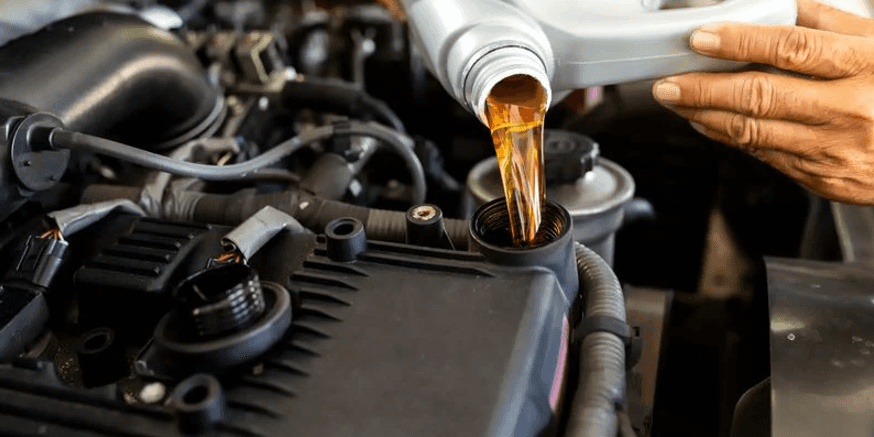
If you own a GMC Sierra HD or a Chevy Silverado HD with a Duramax diesel, you already know these trucks are built for serious work. Keeping them there requires more than just filling the tank. Knowing your Duramax oil capacity and using the right products at the right intervals is what separates a well-maintained truck from one that starts causing expensive problems.
This guide covers engine generations, oil types, change intervals, and what the team at Steve Austin’s Auto Group sees from the trucks we service every day in Bellefontaine.
Why Duramax Oil Capacity Isn’t a Simple One-Size-Fits-All Answer
The actual fill volume depends on the engine generation, model year, oil filter size, and even whether all the old oil fully drained before you started adding new. Aftermarket modifications like an upgraded oil pan can push the number away from the factory spec too.
Relying on a general figure found online can lead to overfilling or underfilling, both of which cause real problems. Overfilling creates excess pressure and foaming; underfilling leaves critical components without enough lubrication under hard use. Knowing the specific configuration of your truck is the only reliable starting point.
Duramax Engine Generations and What Affects Oil Capacity
The Duramax diesel family spans multiple decades and several distinct engine designs. Knowing which engine sits under your hood is step one. The table below summarizes the verified specs for each variant.
| Engine | Models/Variants | Oil Capacity (with filter) | Recommended Oil Type | Typical Interval |
|---|---|---|---|---|
| 6.6L (LB7, LLY, LBZ, LMM, LML, L5P) | Silverado HD, Sierra HD (2001–present) | ~10 quarts | 15W-40 (above 0°F); 5W-40 (cold weather); API CK-4 or CJ-4 | ~7,500 miles normal; ~5,000 miles severe/towing |
| 3.0L (LM2) | Silverado 1500, Sierra 1500 | 7 quarts | 0W-20 full synthetic, GM dexosD | Confirm in owner’s manual |
| 2.8L (LWN) | Colorado, Canyon | 6 quarts | 5W-30 full synthetic, dexos2 | Confirm in owner’s manual |
6.6L Duramax Variants: LB7 Through the Current Generation
The 6.6L Duramax has powered GM’s heavy-duty trucks since 2001, running through the LB7, LLY, LBZ, LMM, LML, and current L5P generations. Despite significant engineering updates across those variants, oil capacity has stayed consistent at approximately 10 quarts when the filter is replaced.
That figure assumes complete draining and a new filter. In practice, some residual oil always stays behind in oil passages and the filter housing after a drain. If the old filter isn’t replaced or the engine doesn’t drain fully, the actual fill amount will be lower than spec. That’s a common reason a DIY fill can feel off. Always replace the filter and allow adequate drain time before measuring the final fill.
The L5P also features an oil life monitoring system that adjusts interval recommendations based on driving patterns and load. It’s a useful tool, though it works best alongside regular visual oil checks rather than as your only reference.
3.0L and 2.8L Duramax Configurations
Not every Duramax owner is driving a heavy-duty truck. GM offers the 3.0L Duramax in the Silverado 1500 and Sierra 1500 light-duty lineup, and the 2.8L has appeared in the Colorado and Canyon. These engines have meaningfully different oil requirements compared to the 6.6L and should never be serviced using the same specs.
The 3.0L requires 7 quarts of 0W-20 full synthetic meeting GM’s dexosD specification. The 2.8L requires 6 quarts of 5W-30 full synthetic meeting dexos2. Using 6.6L-spec oil in either of these smaller engines is a mistake that can affect long-term reliability.
Choosing the Right Oil Type for Your Duramax Diesel
Getting the volume right is only half the equation. Diesel engines operate under conditions gasoline engines rarely see, including higher combustion pressures, elevated soot production, and more demanding thermal cycles. The oil has to handle soot dispersion, resist thermal breakdown under load, and maintain film strength at high temperatures.
Viscosity Grade and API Certification
For the 6.6L Duramax, GM specifies 15W-40 for temperatures above 0°F and 5W-40 for colder conditions. Check the API rating on the container as well. Oils carrying API CK-4 or CJ-4 meet the standards required for heavy-duty diesel use, providing adequate protection against wear and oxidation while resisting soot thickening. A standard passenger car motor oil won’t cut it here.
Full Synthetic vs. Conventional for Heavy-Duty Use
For most Duramax owners, especially those who work their trucks hard, full synthetic is the stronger choice. It holds up better across a wide temperature range, resists thermal breakdown more effectively under heavy load, and handles soot thickening better than conventional oil. Conventional oil can work for lighter-duty use but needs more frequent changes to maintain adequate protection. For trucks regularly used for towing, hauling, farm work, or plowing around Logan County, the difference between the two becomes particularly relevant.
Duramax Oil Change Intervals: Standard Driving vs. Severe-Duty Conditions
Normal Service Intervals
Under standard driving conditions, the 6.6L Duramax oil change interval is approximately 7,500 miles. Many newer trucks also feature the oil life monitoring system mentioned above, which factors in actual driving patterns and load. Checking oil color and consistency between changes gives you an additional data point beyond the mileage counter.
Heavy Towing and Work Use
When conditions shift to what GM classifies as severe duty, including heavy towing, prolonged low-speed idling, or dusty operating environments common on rural roads and job sites, that interval should come down. In those scenarios, changing the oil as frequently as every 5,000 miles can help reduce wear. Dark, gritty, or thinned oil is a clear signal to service the engine regardless of mileage.
Diesel Maintenance Beyond the Oil Change
An oil change is central to Duramax maintenance, but it’s one part of a broader service picture. Specific items to keep current include:
- Oil filter replacement at every oil change
- Coolant check and replacement on schedule to prevent corrosion and maintain proper temperature regulation
- Transmission fluid service specific to your Allison transmission configuration
- Transfer case and differential fluid changes, particularly for trucks that regularly use four-wheel drive
- Air and fuel filter replacements, since a clogged fuel filter can damage injection components on a diesel
- Periodic technician inspection to catch early wear indicators before they turn into larger repairs
Each of these systems has its own fluid type and interval. Verify the specs for your specific truck in the owner’s manual rather than applying general guidelines.
Why Your Owner’s Manual and a Certified Technician Are Your Most Reliable Resources
Your owner’s manual provides the exact oil capacity, oil type, viscosity grade, and service interval recommended by GM for your model year and engine configuration. It also covers fluid specifications for the transmission, transfer case, and cooling system. Before any service, that’s where you should start.
Many capable truck owners handle their own oil changes, and that’s a reasonable choice when done with the correct specs and products. A dealer visit adds things a DIY service typically doesn’t include: proper used oil disposal, verified filter and viscosity selection for your exact configuration, a multi-point inspection by a technician familiar with your truck, and a check for underlying issues that may not be obvious without diagnostic tools. A certified service oil change through our department covers all of these in a single appointment.
Schedule Your Duramax Oil Change at Steve Austin’s Auto Group in Bellefontaine
Serving Duramax Owners Across Logan County
Steve Austin’s Auto Group has been serving GMC and Chevrolet truck owners in the Bellefontaine area since 1995. Located at 2500 Route 68 S with easy access from U.S. Highway 68, U.S. Highway 33, and State Route 47, we’ve spent more than 30 years working on the trucks our neighbors use for towing, farm work, commercial hauling, and daily driving across Logan County, Sidney, and surrounding communities. Steve Austin’s Auto Group holds a BBB A+ rating.
What Our Service Team Provides
Our technicians are GM-certified and understand the specific demands of Duramax diesel engines. Whether you drive a Silverado HD with a 6.6L L5P, a Sierra 1500 with the 3.0L LM2, or a Colorado with the 2.8L LWN, we use the correct oil capacity, oil type, and interval for your truck. Transmission fluid, transfer case and differential fluids, coolant service, and filter replacements can all be handled in a single visit.
Schedule Your Service Appointment
Service hours run Monday through Friday from 7:30 AM to 6:00 PM and Saturday from 9:00 AM to 1:00 PM. You can reach us by phone at (937) 303-4085 or schedule service online. Keeping your Duramax running well starts with a service partner who knows these engines, and that’s what we’re here for.

0 comment(s) so far on Duramax Oil Capacity: Maintaining Your Heavy-Duty GMC or Chevy Truck in Bellefontaine