



Brake Service & Repair in Bellefontaine, OH: Keeping Your GM Vehicle Safe
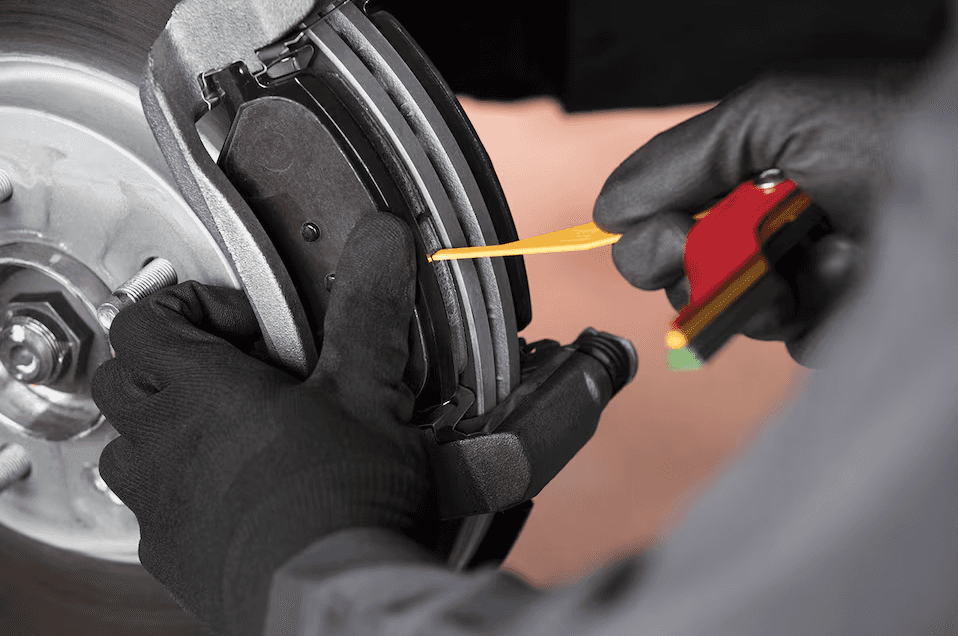
Your brakes are working harder than you probably realize. Every time you slow down on S. Main Street, merge onto U.S. Highway 33, or navigate Bellefontaine’s rolling terrain, your brake system is absorbing real stress. For GM owners in the area, keeping that system in good shape isn’t just a box to check on a maintenance schedule. It’s the foundation of safe stopping power.
At Steve Austin’s Auto Group, drivers across Logan County have trusted our GM-certified technicians with their brake service needs for over 30 years. Whether your Chevrolet Silverado is pulling to one side or your Buick Enclave’s pedal feels softer than usual, we know exactly what to look for. Schedule your brake inspection today and let us take a close look before a small issue turns into a much larger repair.
Brake Service in Bellefontaine, OH: Why GM Owners Can’t Afford to Wait
Brake problems rarely fix themselves. Minor pad wear can quietly escalate into rotor damage, caliper failure, or a full system breakdown, and the difference between catching something early and waiting until it fails matters both for your wallet and your safety.
GM vehicles are engineered with precision, and their brake systems reflect that. It also means GM brakes respond best to care from technicians who understand the specific tolerances, components, and designs involved. Bringing your vehicle to our GM service center means you’re getting expertise built around your exact make and model, not a one-size-fits-all approach.
Warning Signs Your GM Vehicle Needs Brake Service
Brake wear doesn’t always announce itself loudly. Recognizing the signs early is one of the simplest things you can do to protect yourself and your vehicle.
Sounds That Signal Brake Wear: Squealing and Grinding
Squealing is usually the first thing drivers notice when brake pads are wearing thin. GM brake pads include a small metal wear indicator tab engineered to contact the rotor and produce a high-pitched squeal when friction material thins to approximately 2-3 mm. That sound is intentional. It’s your vehicle’s built-in alert to schedule service soon.
Grinding is a different signal entirely, and it means act now. A deep, metal-on-metal grinding when you apply the brakes typically means the pads have worn completely through and the backing plate is contacting the rotor directly. At that point, rotor damage is actively occurring, and the repair becomes significantly more involved. Clicking or rattling during braking can also point to loose hardware or worn brake pad shims, both of which deserve a professional look.
Physical Sensations You Should Never Ignore: Vibration, Pulling, and Soft Pedals
A steering wheel that vibrates or pulses when you brake often signals warped rotors, a common result of repeated heavy stops or sustained heat buildup. Pulling to one side during braking typically points to uneven pad wear, a stuck caliper, or a brake fluid issue on one side of the axle.
A soft or spongy pedal is one of the more urgent warning signs. It usually means air in the brake lines or a problem with the master cylinder, either of which can compromise your ability to stop quickly. Worth knowing for GM vehicles equipped with StabiliTrak and ABS: a brake fault doesn’t just affect stopping distance. It can compromise your entire stability control system. If the pedal sinks closer to the floor than normal before the brakes engage, bring it in as soon as possible.
Why Bellefontaine’s Hilly Terrain Demands More from Your Brakes
Bellefontaine sits at Ohio’s highest elevation, and the surrounding landscape reflects it. Roads throughout Logan County feature noticeable grades and elevation changes that put extra stress on brake systems, particularly on downhill stretches where drivers rely on their brakes far more than they would on flat terrain.
Repeated braking generates heat, and heat is one of the primary causes of brake fade, pad glazing, and rotor warping. Drivers who regularly travel between Bellefontaine and Sidney, or commute along routes with significant grades, may find their brake components wear faster than national averages would suggest.
Ohio winters compound this further. Road salt, moisture, and temperature swings accelerate brake hardware corrosion and increase brake fluid contamination risk. Safe stopping power on a steep descent with a contaminated brake system is not something to leave to chance. Routine brake inspections matter more here than in many other regions, regardless of what the odometer reads.
What Steve Austin’s Auto Group Checks During a GM Brake Inspection
A thorough brake inspection goes well beyond a quick visual pass. Our GM-certified technicians conduct a comprehensive evaluation of your entire brake system to confirm every component is doing its job.
We examine brake pad thickness on all four corners, checking for wear patterns that might indicate a caliper or hardware issue. GM generally recommends replacing pads at 3-4 mm, before the wear indicator activates, to maintain safe stopping power. Rotor condition gets assessed for scoring, grooves, warping, or thickness worn below safe minimums. Calipers are inspected for proper function and signs of leaking, while brake lines and hoses get checked for cracks, corrosion, or soft spots. We also evaluate brake fluid condition, since degraded fluid absorbs moisture over time and reduces braking performance, particularly in cold Ohio winters.
OEM GM Parts: The Safety Standard for Your Brake Repair
When repairs are needed, we use OEM GM parts, specifically ACDelco components, the same parts designed and engineered for your vehicle. Aftermarket brake parts may fit broadly, but they’re built to general tolerances rather than the precise specifications of your Silverado, Terrain, Envision, or Equinox.
ACDelco parts maintain the exact friction coefficients, rotor dimensions, and hydraulic compatibility that GM engineers built your system around. That translates to consistent pedal feel, reliable stopping distances, and the confidence that your brakes will perform exactly as intended. For a safety-critical system, there’s no good reason to compromise on component quality.
How Often Do GM Vehicles Need Brake Service?
There’s no single answer that works for every driver or vehicle. Brake wear depends on driving style, vehicle weight, terrain, and load. As a general guideline, GM recommends brake pad inspection every 10,000 miles. Typical pad lifespan on GM vehicles ranges from 30,000 to 70,000 miles, and given Bellefontaine’s hilly terrain and Ohio winters, many local GM owners find themselves landing at the shorter end of that range.
The table below summarizes GM brake service reference intervals for common GM vehicle types.
GM Brake Service Reference Guide
| Vehicle Type | Example Model | Recommended Pad Inspection Interval | Typical Pad Lifespan | Brake Fluid Change Interval | GM-Specific Notes |
|---|---|---|---|---|---|
| Light-Duty Truck | Silverado 1500 | Every 10,000 miles | 30,000-70,000 miles | Every 45,000 miles or 3 years | Duralife rotor coating on select trims extends rotor life |
| SUV | Equinox / Tahoe | Every 10,000 miles | 30,000-70,000 miles | Every 45,000 miles or 3 years | StabiliTrak integration means brake faults can affect stability control |
| Sedan | Malibu | Every 10,000 miles | 30,000-70,000 miles | Every 45,000 miles or 3 years | Driver Information Center displays brake alerts on equipped models |
Chevrolet’s maintenance schedule for many models, including the Silverado 1500, recommends a brake fluid change at 45,000 miles or every 3 years, whichever comes first. Newer GM trucks (2019+) may follow a 5-year interval, so always verify against your specific owner’s manual. Brake fluid is easy to overlook, but it absorbs moisture over time and becomes less effective at the high temperatures generated by hard braking, a real concern on hilly roads.
If you drive in hilly areas, tow frequently, or notice any of the warning signs covered above, don’t rely on calendar intervals alone. Schedule your brake inspection and let us assess where your vehicle actually stands.
Why Trust Steve Austin’s Auto Group with Your GM’s Brakes
Not every shop is equipped to service GM brake systems the way they’re designed to be serviced. Here’s what sets Steve Austin’s apart.
GM-Trained Technicians and OE Parts
Our technicians receive ongoing training directly from GM, giving them working knowledge of GM-specific brake architectures across Chevrolet, Buick, GMC, and Cadillac vehicles. Every brake repair uses genuine ACDelco OE parts engineered to GM specifications, not generic alternatives built to a broader tolerance.
GM-Calibrated Diagnostics
We use GM-calibrated diagnostic tools that read brake wear data directly from your vehicle’s onboard system. That means we’re working from the same data your vehicle generates, not guessing based on a visual inspection alone. For models equipped with the Driver Information Center, we can also properly reset brake-related warning messages after service, something a generic shop may not handle correctly.
Steve Austin’s Auto Group has served Bellefontaine and Logan County since 1995, and our BBB A+ rating reflects the straightforward, honest service we bring to every appointment.
Frequently Asked Questions About Brake Service
Why are my brakes squeaking?
That squeal is most likely your wear indicator tab doing exactly what it was designed to do. GM brake pads include a metal tab that contacts the rotor and triggers squealing when friction material thins to approximately 2-3 mm. It’s a built-in alert, not a random noise. GM generally recommends replacing pads at 3-4 mm, before the indicator activates, so if you’re already hearing that squeal, it’s time to schedule service.
How long do brake pads last on a Chevy?
On most Chevy vehicles, brake pads typically last between 30,000 and 70,000 miles, depending on driving style, vehicle weight, and terrain. GM generally recommends inspection every 10,000 miles as a baseline. If you drive in hilly areas or deal with a lot of stop-and-go traffic, plan to check them more frequently. Local conditions in and around Bellefontaine tend to push wear toward the shorter end of that range.
Schedule Your Brake Inspection at Steve Austin’s Auto Group Today
Brake service is easy to put off until something feels urgent. Catching a problem early almost always means a simpler repair and a safer vehicle. If your GM is due for a brake check, or something just doesn’t feel right when you slow down, it’s worth getting it looked at now.
Book Your Appointment
Steve Austin’s Auto Group is Bellefontaine’s trusted source for GM brake service, backed by over 30 years of local experience, GM-certified technicians, ACDelco OE parts, and the diagnostic capability to service your vehicle correctly from the first visit. Schedule your brake inspection online, or contact us to reach our service team directly. We’re located at 2500 S Main Street, Bellefontaine, OH, with service hours Monday through Friday 7:30 AM to 6:00 PM and Saturday 9:00 AM to 1:00 PM.

0 comment(s) so far on Brake Service & Repair in Bellefontaine, OH: Keeping Your GM Vehicle Safe