



Used Trucks for Sale in Bellefontaine, OH: What to Check Before You Buy
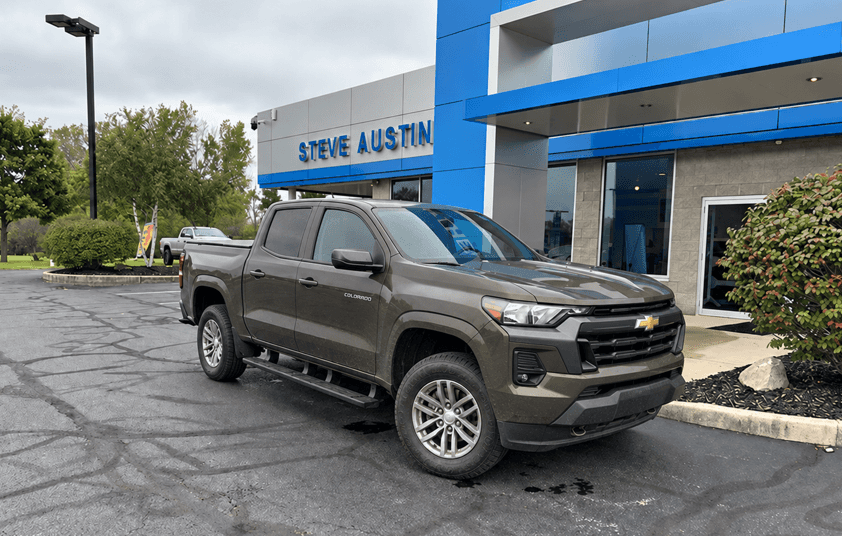
Buying a used pickup isn’t quite like buying a used sedan. There’s more mechanical complexity, more variation in how the truck actually lived its life before you, and getting the cab, bed, and towing setup right matters a lot more for how you’ll actually use it. At Steve Austin’s Auto Group, we work with buyers across Bellefontaine, Sidney, Logan County, and Urbana every week, and we’ve put together this guide to help you shop smarter. If you’re ready to start looking now, you can browse our inventory of used trucks any time.
Why Bellefontaine Drivers Choose Used Trucks for Work, Towing, and Family Life
Trucks are practical here. Farm work, trades, towing a boat or trailer, hauling gear for weekend projects, a pickup gets used hard in this part of Ohio. Used trucks give buyers a way into that capability without paying new-vehicle prices, and since trucks tend to hold up well mechanically when maintained, a well-cared-for used model can deliver years of reliable service. For many families cross-shopping used trucks around Bellefontaine, a truck ends up winning out simply because it does double duty as a work vehicle and a family hauler.
Cab Size and Bed Length: Matching a Truck to Your Needs
Figure out how many people and how much cargo you actually need to move on a regular basis before you start comparing engine specs or towing numbers. Cab and bed configuration shapes your day-to-day experience with the truck more than almost anything else.
Crew Cab, Double Cab, or Regular Cab
A Crew Cab gives you a full second row with full-sized rear doors, the pick for families or crews who need to move people comfortably. A Double Cab gives you a smaller back seat and narrower rear doors, a middle ground for occasional passengers. A Regular Cab skips the back seat entirely, prioritizing front-seat space and, often, a longer bed. Ford builds its F-150 in Regular Cab, SuperCab, and SuperCrew body styles, each aimed at a different mix of passenger and cargo priorities. The 1500/2500/3500 naming convention traces back to original payload classes, roughly half-ton, three-quarter-ton, and one-ton.
Short Bed vs. Long Bed Considerations
Bed length is a trade-off between maneuverability and capacity. A short bed is easier to park and back into tight driveways or job sites around Bellefontaine, while a long bed swallows more lumber, equipment, or furniture in one trip. The Chevrolet Silverado 1500 and GMC Sierra 1500 are both offered with short, standard, and long beds depending on cab style, with the long bed reserved for Regular Cab models. Ford’s Regular Cab F-150 is available with a 6.5-foot or 8-foot bed, and the SuperCrew pairs with a 5.5-foot or 6.5-foot bed. On a used truck, always confirm the exact bed length in person since configurations shift by model year.
Mechanical and Safety Checklist Before You Buy
Once you know the body style you want, it’s time to get into the mechanical condition of the specific truck in front of you. Skipping this step is how buyers end up with expensive surprises a few months down the road.
Mileage, Service History, and Prior Use
High mileage isn’t automatically a dealbreaker, and low mileage isn’t automatically a green light. A truck with 90,000 miles and full service records is often a safer bet than one with 40,000 miles and no paperwork. Ask for maintenance records and find out how the truck was used before it landed on the lot, whether as someone’s daily driver, a rental unit, or a commercial vehicle, since that history affects wear patterns you won’t always see on the surface.
Tires, Brakes, and Suspension Wear
Tires are unsafe once tread depth drops below 2/32 of an inch, and most tires have built-in wear indicators that become flush with the tread grooves at that point, so check tread depth and pressure carefully rather than eyeballing it. In Ohio, road salt and winter grime accelerate rust on frames, brake lines, and suspension components, so look closely underneath. Watch for frame rust or bending and worn bushings, and check for uneven tire wear that can point to alignment problems. A truck that sits noticeably lower on one side, or unevenly overall, may be showing stress on its leaf springs or air suspension from towing loads it wasn’t built for.
4WD System and Drivetrain Check
If the truck you’re considering has 4WD, have it inspected before you buy rather than relying on how it feels in a quick test drive. A technician can verify that the system engages properly and check for issues in the transfer case and drivetrain that aren’t obvious from the driver’s seat. For day-to-day engagement questions, your owner’s manual or a qualified technician is the right resource rather than guesswork. Our service center can run a pre-purchase inspection on a truck you’re considering, even one you’re looking at elsewhere.
Towing and Payload: What to Verify
If towing or hauling heavy loads is the reason you’re shopping for a truck at all, slow down here and read carefully.
Towing Equipment and Hitch Condition
Inspect the hitch receiver and any towing equipment for rust, cracking, or signs of a poor installation. The trailer weight at which a weight-distributing hitch becomes necessary varies by manufacturer. GMC, for example, says Sierra 1500 models towing more than 7,000 pounds should switch from a weight-carrying hitch to a weight-distributing hitch. Check the owner’s manual for the specific truck, and confirm it either has the right equipment or can be fitted with it. Not every half-ton truck is built for every trailer type, either. A Ram 1500, for instance, is not rated to tow fifth-wheel trailers.
Payload Capacity for Work or Trailers
Payload and towing capacity are not the same number, and both vary significantly by trim, cab, and drivetrain, so treat published specs as a starting point rather than a guarantee for the specific used truck on the lot. For reference, a new GMC Sierra 1500 Crew Cab with a standard bed can be rated up to 1,950 pounds of payload, and a Regular Cab up to 2,230 pounds. Heavier-duty siblings like the Sierra 2500 HD and Sierra 3500 HD can tow up to 22,390 and 36,000 pounds, respectively, with a fifth-wheel hitch when properly equipped. These figures come from new-vehicle specs and are meant for reference only. Confirm the actual capacity of any used truck with our team before you buy.
Vehicle History and Paperwork to Confirm
A vehicle history report, commonly a CARFAX report, can help reveal potential prior accidents, past ownership as a personal vehicle, rental, taxi, or police unit, service history, open recalls, and flags for flood, lemon, or rollback titles. These reports can only show what’s actually been recorded somewhere, so pair one with a physical inspection rather than trusting it alone. For title and odometer verification specifically, the National Motor Vehicle Title Information System, or NMVTIS, lets buyers check title status and odometer readings, plus brand history like junk or salvage designations. Ohio buyers can also confirm title details directly through the Ohio BMV, or simply ask our team to walk through the paperwork with you.
A short list of dealbreakers worth remembering as you shop:
- Frame rust that has eaten through metal rather than just surface corrosion
- A flood or salvage title on the vehicle history report
- Mismatched panel paint suggesting undisclosed collision repair
- Water stains inside the cab or under carpeting
Smart Test-Drive Questions for Any Pre-Owned Pickup
A test drive should do more than confirm the truck starts and drives straight. Walk the exterior first and look for wheel rash, nicks in the tire sidewalls, remaining tread depth, paint chips or scratches, and uneven panel gaps that might hint at prior repair work. During the drive, pay attention to the exhaust: black smoke often points to a fuel or injector issue, white smoke can signal a coolant leak or head gasket problem, and blue smoke usually means the engine is burning oil. Shift into reverse and confirm it engages smoothly with minimal rollback before you accelerate. Don’t hesitate to ask direct questions about prior use, service intervals, and any known issues, either; a straight answer tells you a lot about the seller.
Comparing Popular Used Truck Brands in Ohio
Cross-shopping is smart, whether you’re comparing Chevrolet against Ford or Ram, or just trying to understand how specs differ across brands. Below is a compact comparison of illustrative, current model-year specs across four popular half-ton trucks. Remember that used inventory will vary by model year, so treat this as a reference point rather than a guarantee.
| Brand & Model | Cab Configurations | Bed Options | Max Towing | Max Payload |
|---|---|---|---|---|
| Chevrolet Silverado 1500 | Regular Cab, Double Cab, Crew Cab | Short, Standard, or Long Bed | Up to 13,300 lbs. | Up to 2,260 lbs. |
| GMC Sierra 1500 | Regular Cab, Double Cab, Crew Cab | Short, Standard, or Long Bed | Up to 13,300 lbs. | Up to 2,230 lbs. |
| Ram 1500 | Quad Cab, Crew Cab | 5’7″ or 6’4″ | Up to 11,610 lbs. | Up to 2,360 lbs. |
| Ford F-150 | Regular Cab, SuperCab, SuperCrew | 5.5′, 6.5′, or 8′ | Up to 13,500 lbs. | Up to 2,440 lbs. |
Figures reflect manufacturers’ published maximums for recent model years and require specific engine, cab, bed, drivetrain, and package combinations. Cab styles, bed lengths, and ratings on used trucks vary by model year and equipment, so confirm the actual specs of any truck before you buy.
Chevrolet also markets a connected trailering system that can build custom trailer profiles with pre-departure checklists. On the engine side, the Silverado 1500’s standard 2.7L TurboMax produces 430 lb.-ft. of torque, while the available 3.0L Duramax diesel produces 495 lb.-ft. None of this replaces confirming actual specs on the specific used truck you’re considering, whether it’s a Silverado, Sierra, Ram, or F-150.
Browse Used Trucks for Sale in Bellefontaine, OH
If you’ve made it this far, you have a solid framework for evaluating cab size, mechanical condition, towing capability, and paperwork. The next step is simple: come take a look at what’s actually on our lot. We carry a rotating selection of used trucks for sale in Bellefontaine, OH, alongside our full lineup of Chevrolet, GMC, and Buick vehicles and other quality pre-owned and Certified Pre-Owned options. You can browse our current used truck inventory online, and if you don’t see the exact configuration you want, let us know. We’ll locate it at no additional cost to you.
Trade In and Finance Your Next Used Pickup with Steve Austin’s Auto Group
We’ve been part of the Bellefontaine, OH community since 1995, serving Sidney, Logan County, and the surrounding area with sales and service, plus collision repair, all in one place. We hold a BBB A+ rating, and our GM-certified technicians back every used truck we sell with real service capability, not just a handshake.
Ready to Trade In or Get Financed?
When you’re ready to trade in your current vehicle or line up financing, our finance team can walk you through your options and help structure a plan that fits your budget. Stop by, give us a call at (937) 404-5823, or reach out through our contact form to get started on your next used pickup today.

0 comment(s) so far on Used Trucks for Sale in Bellefontaine, OH: What to Check Before You Buy